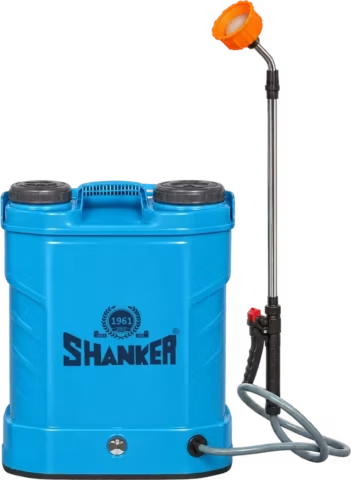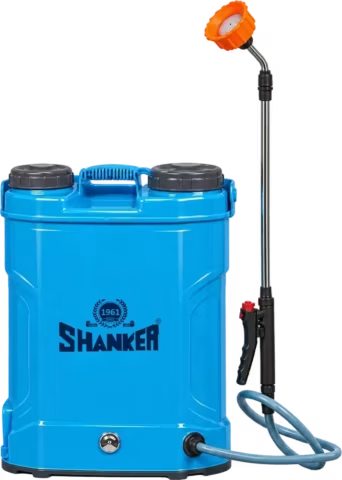

Short answer: Knapsack sprayer calibration takes ten minutes: spray a measured strip with plain water, measure the litres used, then use PAU's formula, litres used × 4000 ÷ area in square metres. The answer is your litres per acre; divide it by your tank size to get tank fills.
Two farmers buy the same insecticide, mix the same dose per tank and spray the same crop. One gets control and one does not. Very often the difference is how much water each man actually put on an acre. Calibration is how you find that number for your own sprayer, your own walking speed and your own nozzle.
Tamil Nadu Agricultural University puts the reason simply: "In order to ensure uniform application of pesticide on crops, it is essential to carry out sprayer calibration exercise before undertaking actual spraying work"1. The government's IPM packages say the same: "It is advisable to check the output of the sprayer (calibration) before commencement of spraying"2.
What You Need
- Your sprayer, with the nozzle you will use in the field
- A measuring jug or a bucket marked in litres
- A measuring tape and four sticks or pegs
- Plain clean water (no chemical)
- A notebook
Knapsack Sprayer Calibration Step by Step: Area and Volume
TNAU calls this the method that "is easier for a normal farmer to follow"1. Punjab Agricultural University (PAU) gives the same method with a ready formula for acres3.
- Fill a measured amount. Put an exact quantity of plain water in the tank, for example 10 litres.
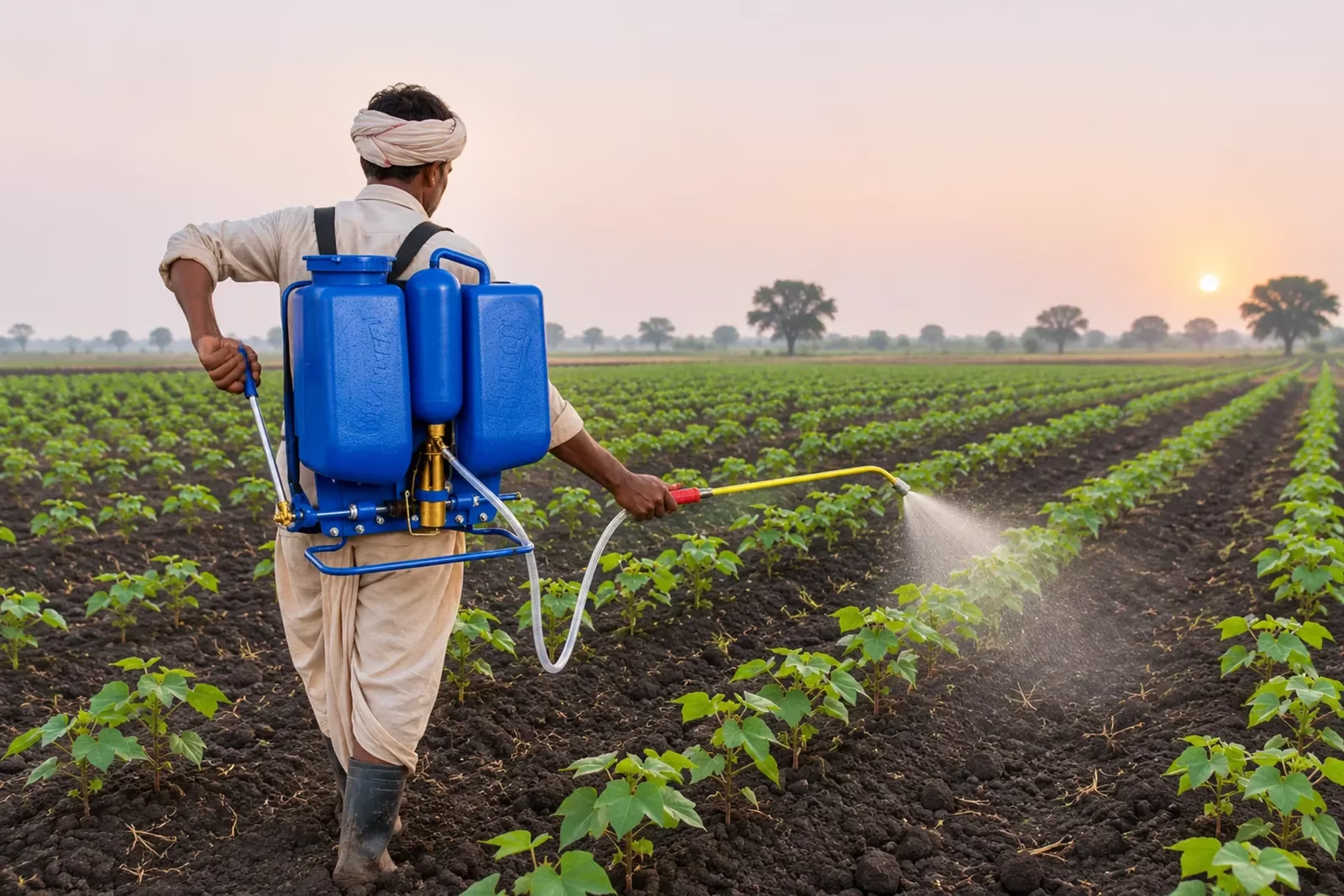
- Spray a strip of your own field. Walk at your normal pace, with the pressure and nozzle you will use for real. Hold the nozzle at the working height. PAU advises keeping the nozzle "around 1.5 feet from the crop canopy" and spraying "in strips by keeping the spray lance straight. Do not move the spray lance to and fro"3.
- Stop and measure what you used. Refill the tank back to the starting mark with the jug. The water you add is what you sprayed.
- Measure the area you covered. Length of the strip multiplied by the width of the spray band, in square metres.
- Work out litres per acre. PAU's formula is: litres per acre = litres used × 4000 ÷ area sprayed in square metres3.
Worked example. You spray 5 litres over a strip 50 m long and 5 m wide, which is 250 m². 5 × 4000 ÷ 250 = 80 litres per acre.
Repeat the test once more. If the two results differ a lot, your walking speed or pressure is not steady. Fix that before you spray chemical.
How Much Water Should You Be Aiming For?
There is no single right figure. It depends on the crop, its size and what you are spraying. These are published figures from Indian institutes:
- PAU (Punjab), for knapsack spraying: "Always use 200 litres of water for pre-emergence herbicides at the time of sowing and 150 litres of water per acre for post emergence application. Use 200 litres of water for control of diseases and 100-150 litres of water per acre for control of insect pests"3.
- ICAR Central Institute for Cotton Research, for cotton: "Use 150-200 litres of water /acre or 375-500 litre/ ha for dilution of the insecticides"4.
Your pesticide label and your local KVK or agriculture officer have the final word for your crop. Calibration tells you whether your sprayer is anywhere near that figure.
From Litres per Acre to Tanks per Acre
Divide your target water per acre by your tank size. PAU gives this example: "if water required for spraying in one acre is 150 litres and capacity of spray pump is 15 litre. It means 10 pumps are required for spraying one acre area"3. With a 16 L SHANKER Ganesh SHP-12 or a 20 L Mahadev SHP-21, the same 150 litres works out to about 9.4 or 7.5 tank fills6.
Splitting the Dose Evenly Between Tanks
Measuring a tiny dose into every tank invites mistakes. PAU's method avoids that: "dissolve the quantity of pesticide required for one acre in less quantity of water and make the volume to 10 litre. Now, pour one litre of this pesticide solution in one spray pump"3. Match the stock volume to your number of tank fills, so each tank gets the same share. PAU also warns that the "actual amount of pesticides recommended" should not be reduced when you change the water volume3.
Walking Speed and Lever Strokes
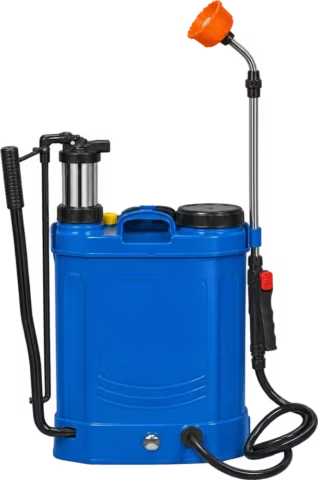
If you walk faster, you put less on each square metre. The IPM package advises: "Operator should maintain normal walking speed while undertaking application"2. For a lever-operated knapsack, the same package gives working figures: a hollow cone nozzle at 35 to 40 psi with "Lever operating speed = 15 to 20 strokes/min" for insects and diseases, and a flat fan or flood jet nozzle at 15 to 20 psi with "7 to 10 strokes/min" for weeds2.
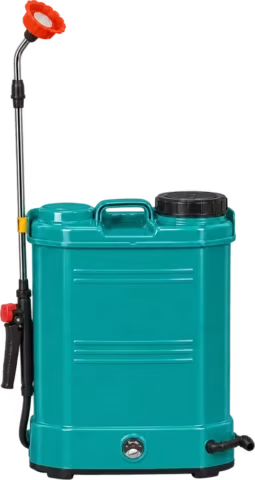
On a battery sprayer, the pump sets the pressure, so your walking speed and nozzle choice do most of the work. Calibrate it the same way.
Check the Nozzle During Knapsack Sprayer Calibration
A worn nozzle sprays more than it should and sprays unevenly. PAU's rule: "If the discharge rate of the nozzle exceeds by 10-15% than the initial discharge rate, the nozzle is considered as worn out. Replace the worn out nozzle"3. Scientists at the ICAR Directorate of Weed Research, Jabalpur, give a 10% limit and note that worn nozzles can push the variation in spray up to "35 to 57%" against about 6% for new ones5.
A simple check: hold a jug under the nozzle for one minute at working pressure and note the litres. Do this with a new nozzle when you buy it, write the figure down, and repeat the test each season.
When to Repeat Knapsack Sprayer Calibration
- When you change the nozzle or the operator
- When the crop grows and you raise the nozzle height
- At the start of every season
- When a spray did not give the control you expected
FAQ
Yes. The pump pressure is fixed, but the litres per acre still depend on your nozzle and walking speed. Use the same area and volume method.
One acre is about 4,000 square metres, so the formula converts the water used on your test strip into litres for a full acre3.
No. Follow the label dose per acre. PAU says the recommended amount of pesticide "should not be reduced" when water volume changes, and the same logic applies to raising it3.
Sources
- TNAU Agritech Portal, "Working principle of spray equipment", section "Spray calibration": agritech.tnau.ac.in Back to Text
- Directorate of Plant Protection, Quarantine and Storage and NIPHM, Integrated Pest Management Package for Soybean (2014), "Protocol for pesticide application techniques" and "Operational, calibration and maintenance guidelines": niphm.gov.in Back to Text
- Punjab Agricultural University, Package of Practices for Crops of Punjab, Rabi 2025-26, chapter 11 "Spray technology": pau.edu Back to Text
- ICAR Central Institute for Cotton Research, Nagpur, "Strategies and Advisory for Cotton Pest and Disease Management for the year 2024-25": nsai.co.in Back to Text
- Chethan C. R. and others, ICAR Directorate of Weed Research, Jabalpur, "Herbicide application in agriculture: nozzle selection and effective application", Indian Farming 68(12), December 2018: epubs.icar.org.in Back to Text
- SHANKER product brochure (2022): tank sizes of SHP-12 (16 L) and SHP-21 (20 L). Back to Text