
Short answer: Good sprayer battery care is four habits: charge it the same evening you spray, stop when the spray weakens instead of running it flat, use only the charger that came with it, and store it fully charged in a cool, dry place with a top-up in mid season.
In a battery sprayer, the battery wears a little with every charge and discharge3, and battery makers warn that it can lose capacity if it is left uncharged2. Both kinds of wear are in your hands.
This sprayer battery care guide covers charging, running time, storage and replacement. It draws on SHANKER's brochure for the sprayer side and on battery makers' published manuals for the battery side.
Sprayer Battery Care Starts with Knowing What You Have
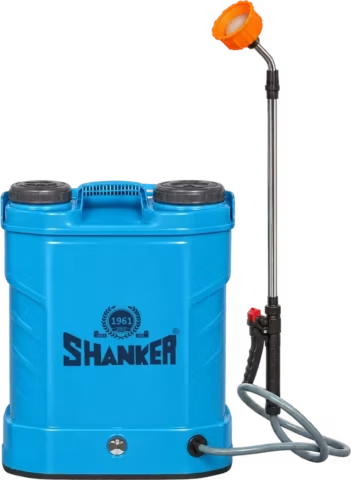
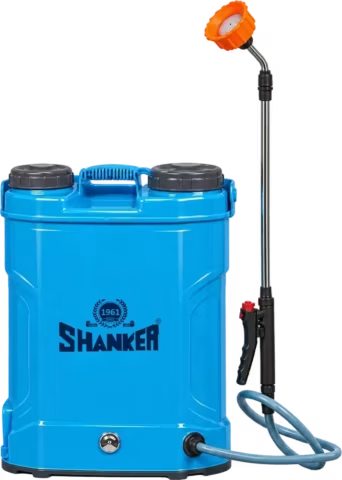
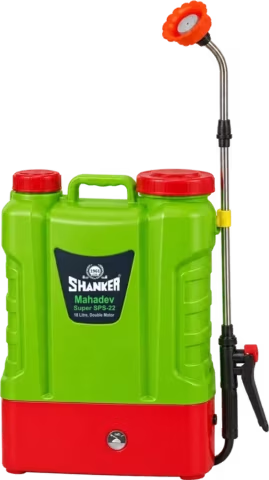
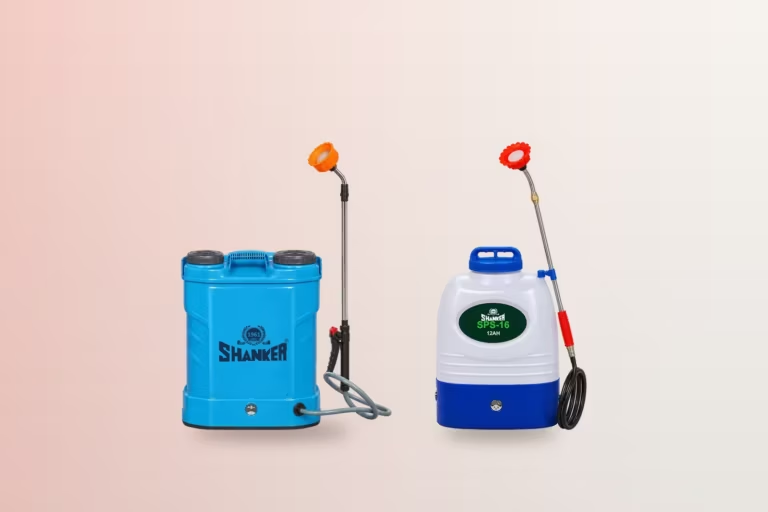
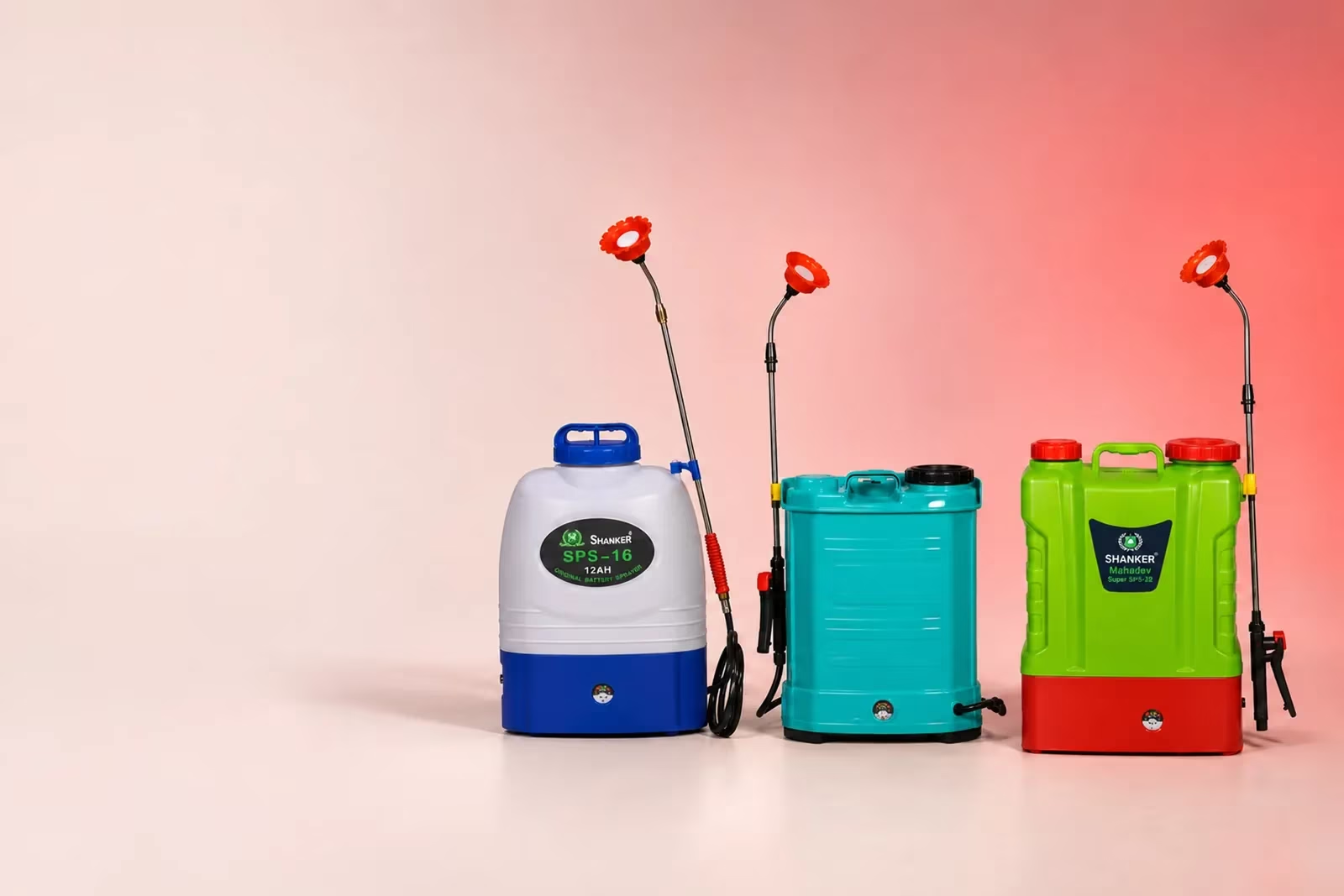
SHANKER battery sprayers use a 12 V battery in two sizes1:
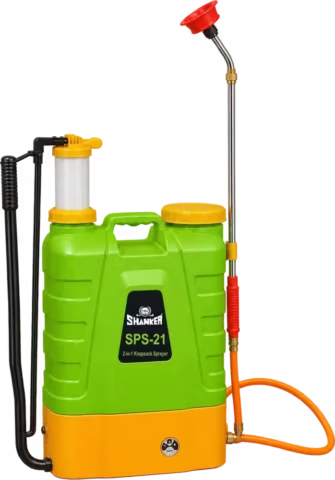
- 12V 8Ah or 12V 12Ah: Ganesh SHP-12, Trishul SHP-17, Kartikeya SHP-19, Parvati SHP-18, Nandi SPS-21 and the Sathi fertilizer broadcaster.
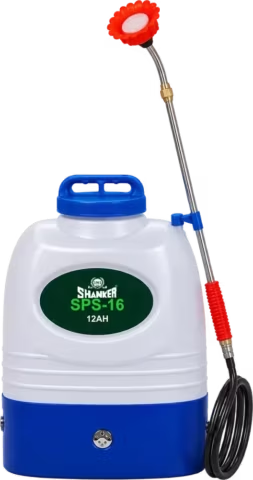
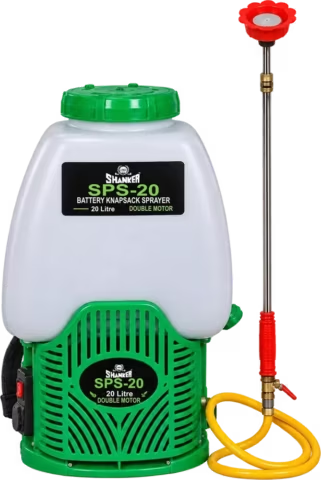
- 12V 12Ah: SPS-16 and the double motor models Mahadev SHP-21, SPS-20 and Mahadev Super SPS-22.
The brochure describes the battery as "maintenance free"1. That means you do not top it up with water. It does not mean it needs no care.
Check the label on your battery. If it says sealed lead acid, SLA or VRLA, the guidance below from lead-acid battery makers applies. If it is a different type, follow that maker's manual.
Charge After Every Spraying Day
Do not leave a battery sitting empty. Narada, a maker of sealed lead acid batteries, warns in its operation manual that "If the battery is not recharged in time after discharge", the batteries "will lose part of capacity in short period"2. The same manual says: "The battery needs to be fully charged as soon as possible"2.
Make it a habit: finish spraying, wash the sprayer, put it on charge the same evening.
Do Not Run It Flat
A sealed lead acid battery has a lowest safe voltage. Narada's manual puts "the end voltage of 6V & 12V range battery" at "10.8V per block", and warns that "The lower end voltage will harm the battery, especially when the voltage drops to 0V and the battery cannot be recharged in time. It will shorten the life of the battery greatly"2.
Yuasa's NP series data sheet makes the same link between use and life: "Depending upon the average depth of discharge, over a thousand discharge/charge cycles can be expected"3. The deeper you drain it each time, the fewer cycles you get.
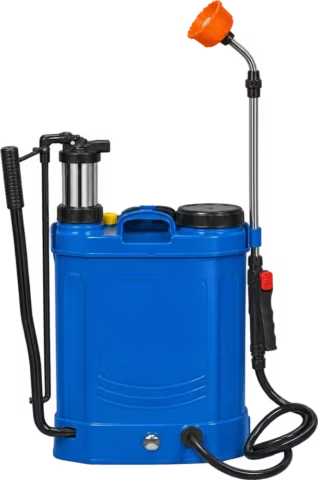
In practice: when the spray starts to weaken, stop and recharge. Do not keep pressing the switch to squeeze out the last tank. This is where a 2 in 1 sprayer helps. Parvati SHP-18 and Nandi SPS-21 have an "option for handle operation if battery gets discharged"1, so you can finish the row by hand and save the battery.
Use the Charger That Came with It
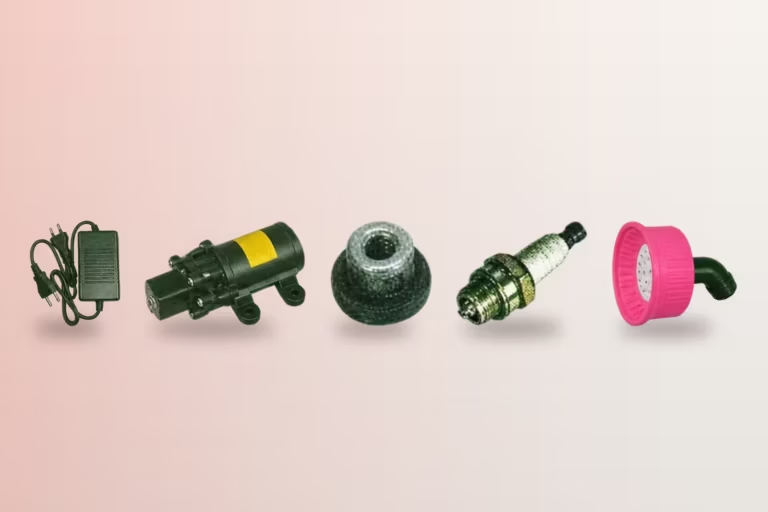
SHANKER lists a "three stage reliable & durable charger" on SHP-12, SHP-17, SHP-18, SHP-19 and the Sathi broadcaster1. The battery sprayer spares list shows two chargers, rated 1.7A and 1.1A1. Use the charger matched to your model. A bigger or mismatched charger is not a shortcut.
Two safety points from Yuasa's data sheet:
- Charge within the temperature range the maker gives. For the NP series it lists charging at 15°C to 50°C3. Do not charge a battery that has been sitting in hot sun in the field. Let it cool in the shade first.
- "On no account should the battery be charged in a sealed container"3. Charge in an open, ventilated room, never inside a closed box or trunk.
An ICAR team that built a solar knapsack sprayer added "an electronic control" for "protection against deep discharge and over charging of battery for longer operational life"4. Both deep discharge and overcharging shorten battery life. Unplug once the charger shows full, unless your charger's instructions say it can stay connected.
Storing the Sprayer Between Seasons
After kharif and again after rabi, a sprayer may sit unused for weeks. Do this before you put one away:
- Wash and dry the sprayer. Flush the tank, pump and lance with clean water. Drain it fully.
- Charge the battery to full. Yuasa lists its storage temperature range for a "fully charged battery"3. Never store a battery empty.
- Store it cool and dry. Yuasa's data sheet says its low self-discharge "allows the battery to be stored for extended periods up to one year at normal ambient temperatures with no permanent loss of capacity"3. That is a figure for one battery range under the maker's conditions; a hot tin shed is not "normal ambient".
- Top up the charge during storage. Narada's manual recommends an extra charge for "Battery storage for more than 6 months"2. A simple habit: charge it once in the middle of the off season and again before the first spray.
- Keep the charger with it. Store charger, lead and sprayer together, so you do not end up using a different charger.
Sprayer Battery Care: Signs Worth Checking
- It charges overnight but runs far fewer tanks than it used to.
- Pressure drops early in the first tank.
- The battery case is swollen, cracked or leaking. Stop using it at once.
Before you buy a new battery, check the charger and the charge jack. The SHANKER battery spares list includes the charge jack, power switch, regulator and both chargers as separate parts1. A loose jack can look like a dead battery. Your dealer can test each one.
When you do replace it, match the voltage and the size that fits the base compartment. SHANKER lists both a "12/12AH Battery" and a "Battery 8AH" as spares1.
FAQ
Use the charger supplied with your model and follow its instructions. ICAR's research sprayer added protection against overcharging because it shortens battery life4.
The 12Ah battery stores more charge, so it should run longer per charge on the same pump. The brochure offers both on several models1. Ask your dealer which suits your daily area.
Only with a charger made for that purpose. A direct connection does not control the charge.
Sources
- SHANKER product brochure (2022), battery knapsack sprayer pages, fertilizer broadcaster page and battery sprayer accessories page. Back to Text
- Narada Power Source Co., "Valve Regulated Sealed Lead Acid Battery, 6V & 12V Series, Operation Manual", Version V1.0: communityarchive.victronenergy.com Back to Text
- GS Yuasa, NP Series general purpose batteries, NP 7-6 product data sheet ("Long shelf life", "Long cycle service life", "Operating temperature range", "Valve regulated design"): cdn.adiglobaldistribution.co.uk Back to Text
- ICAR, Indian Journal of Agricultural Sciences, Vol. 88 No. 4 (2018), "Development of solar powered knapsack sprayer", abstract: epubs.icar.org.in Back to Text